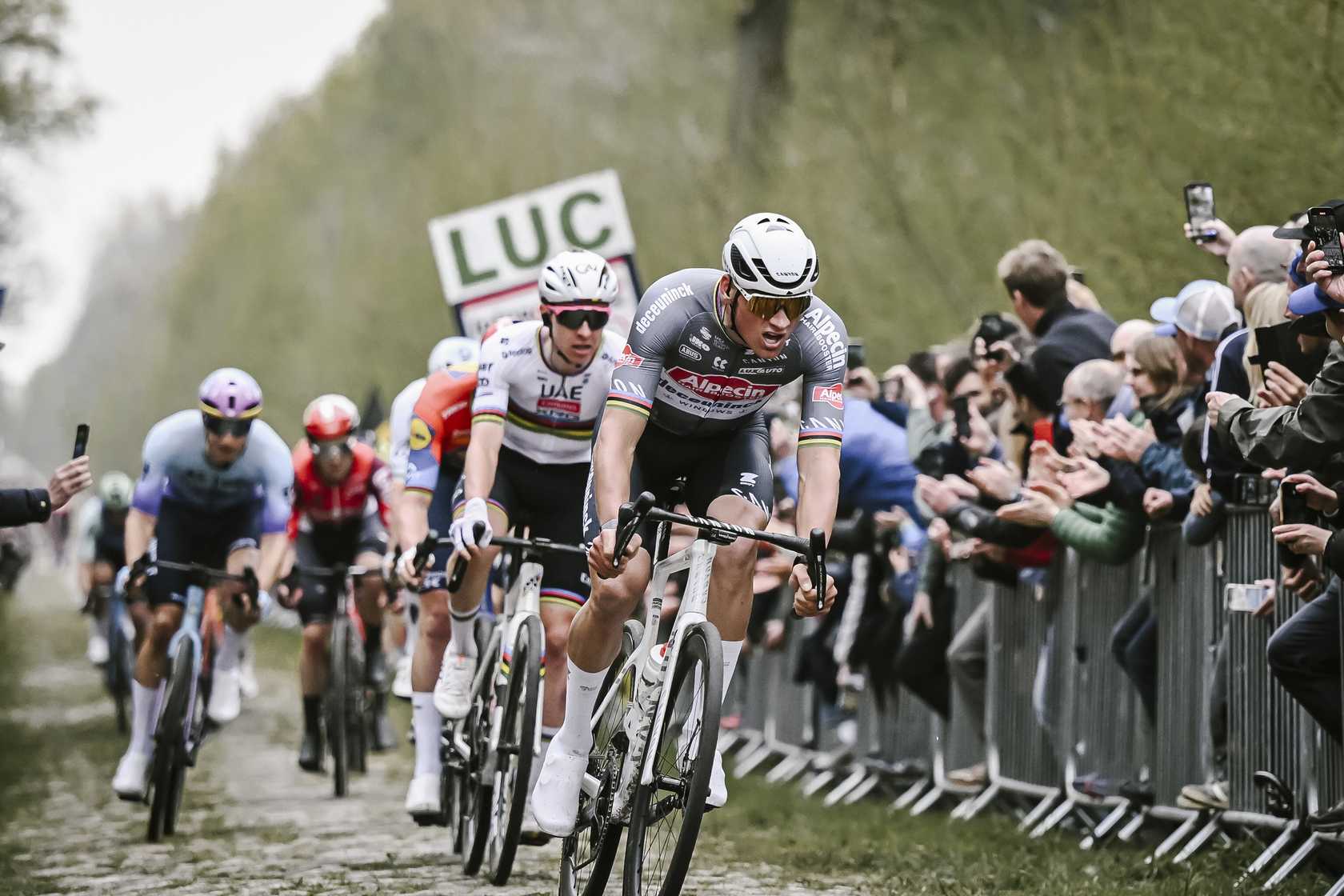
The “Hell of the North” is the ultimate proving ground for cycling technology. Since 2018, DMCX has documented the sport’s transition from the final vestiges of rim brakes and narrow tires to the high-tech, 13-speed, telemetry-driven machines of 2026.
While I have been documenting pro bikes since 2018, my granular technical rosters focus on the pivotal years where major tech shifts occurred. This archive serves as a chronological library of the frames, components, and specific rider setups that have tamed the pavé.
The Technical Evolution Timeline
| Year | Milestone Tech Shift | Standard Tire Width | Drivetrain Trend |
|---|---|---|---|
| 2021 | The Muddy Resurrection | 30mm – 32mm | Disc Brake Supremacy |
| 2022 | The Speed Record (45.7km/h) | 28mm – 30mm | Tubeless Dominance |
| 2023 | Aero-Efficiency Optimization | 32mm | 12-Speed Wireless |
| 2025 | Real-time Pressure Management | 32mm – 35mm | KAPS/Gravaa Systems |
| 2026 | The 13-Speed Revolution | 32mm – 34mm | 1x XPLR AXS & Telemetry |
Winning Brands: The Technical Dominance of Canyon
While the history of Paris-Roubaix was once defined by Specialized and their dedicated “Roubaix” endurance frame, the last decade has seen a total shift. Canyon has effectively neutralized the “all-rounder vs. endurance” debate, with the Aeroad CFR winning three consecutive editions (2023, 2024, 2025).
The formula for success is now clear: Maximum aerodynamics + 32mm tubeless tires. The industry has moved away from specific “cobble bikes” in favor of pure aero frames that offer enough clearance to run high-volume, low-pressure rubber.
Component Hierarchy: Shimano vs. SRAM
Despite the high-profile 2026 shift to 13-speed systems, Shimano Dura-Ace Di2 has been the reliable workhorse for every winner since 2021. However, the gearing is getting larger; while 53/39T was the standard for decades, the current peloton, led by the likes of Josh Tarling and his massive 62T chainring in 2024 has pushed the winning gear up to a 54/40T baseline for the top contenders.
2021 Milestone: The Death of Rim Brakes
The 2021 edition was the definitive turning point for braking technology. Faced with the worst mud-fest in two decades, INEOS Grenadiers,the last WorldTour team to hold out on rim brakes, officially made the switch to the Pinarello Dogma F Disc. The sealed nature of hydraulic systems and the massive tire clearance afforded by disc frames proved to be the only logical choice for the modern Hell of the North.
The “Winner’s Circle” Technical Breakdown (2021–2025)
This table provides the granular detail—the bikes and components that actually crossed the line first.
| Year | Winner | Machine & Spec | Gearing (Chainrings) | Tires & Pressure |
|---|---|---|---|---|
| 2026 | TBC | TBC | 1x 13-Speed (Expected) | 32mm-34mm TBC |
| 2025 | Mathieu van der PoelTriple | Canyon Aeroad CFR | Shimano DA 54/40T | Vittoria Corsa Pro 32mm ~3.4 Bar |
| 2024 | Mathieu van der Poel | Canyon Aeroad CFR | Shimano DA 54/40T | Vittoria Corsa Pro 32mm 3.46 Bar |
| 2023 | Mathieu van der Poel | Canyon Aeroad CFR | Shimano DA 54/40T | Vittoria Corsa Pro 32mm 3.5 Bar |
| 2022 | Dylan van Baarle | Pinarello Dogma F | Shimano DA 54/40T | Continental GP5000 S TR 30mm 3.8 Bar |
| 2021 | Sonny Colbrelli | Merida Reacto | Shimano DA 53/39T | Continental GP5000 S TR 30mm 3.6 Bar |
DMCX Performance Ranking: The Brands of the Pavé
Based on our archive data from the last 5 years, this is how the hardware ranks for durability and performance in the “Hell of the North.”
1. Bike Brand Power Ranking
- Canyon (3 Wins): The Aeroad CFR has become the modern benchmark. Its ability to balance aero-efficiency with enough clearance for 32mm+ tires has made it the “Roubaix King.”
- Pinarello (1 Win): The Dogma F proved that a pure “all-rounder” can win at record speeds (45.7km/h) without needing specific “Endurance” geometry.
- Merida (1 Win): The Reacto’s 2021 victory shattered the myth that aero bikes are too harsh for the cobbles.
2. The Tire War: Continental vs. Pirelli
- Continental (GP5000 S TR): The choice for the 2021 and 2022 winners. Known for the best “sidewall survival” in high-attrition sectors like Arenberg.
- Pirelli (P Zero Race TLR): The 2023-2025 favorite for Alpecin-Deceuninck. It currently holds the edge in rolling resistance on the “flat-out” tarmac sectors.
3. Components: The 1x Transition
While Shimano Dura-Ace Di2 still dominates the total win count, 2024-2026 marks the absolute rise of SRAM 1xsetups for specialized cobble attacks. The elimination of the front derailleur is no longer just for “weight”, it’s for chain security in the 5-star sectors.
The Archive: Edition by Edition
Explore the deep-dive technical rosters and bike sizing analysis from the most significant editions of the race:
The 13-speed revolution. Live vibration telemetry and the debut of uphill cobbled sectors at Briastre.
The era of KAPS tire pressure control. Van der Poel wins his 3rd title on 32mm tubeless tires.
Aero supremacy. 1x drivetrains move from experimental to the pro-standard for Alpecin.
Sagan’s Farewell. The transition to 32mm Pirelli rubber and the end of mechanical shifting.
The Speed Record. Van Baarle wins on the Dogma F. Disc brakes effectively end the rim brake era.
The Muddy Resurrection. Colbrelli’s triumph. Absolute proof of disc brake superiority in extreme wet pavé.
The “Tech Graveyard”: Lessons from the Pavé
n this archive, we don’t just celebrate the winners; we document the failures of engineering. The history of Roubaix is a pendulum of innovation:
- The Death of Rim Brakes: The 2021 edition was the final proof that rim brakes could no longer compete. The clearance and mud-shedding capabilities of disc brakes are now a mechanical necessity.
- The 25mm Myth: We remember when 25mm was considered “wide.” Today, any rider on less than 30mm is at a massive disadvantage in terms of rolling resistance and vibration damping.
- Micro-Compliance vs. Suspension: From the 90s RockShox forks to the Specialized Future Shock, we have seen mechanical suspension evolve into the “micro-compliance” of modern carbon layups and high-volume tubeless tires.
GET THE DMCX EDGE
Don’t rely on the mainstream news. Join the DMCX newsletter for the unfiltered tech analysis, pro bike geometries, and rider sizing you can’t find anywhere else.